Take a useful question sheet to a vacuum demonstration
Take a concise, task-based question sheet to a retailer so a demonstration addresses your home and leaves a useful written record.
Updated:
Choose the questions before the showroom
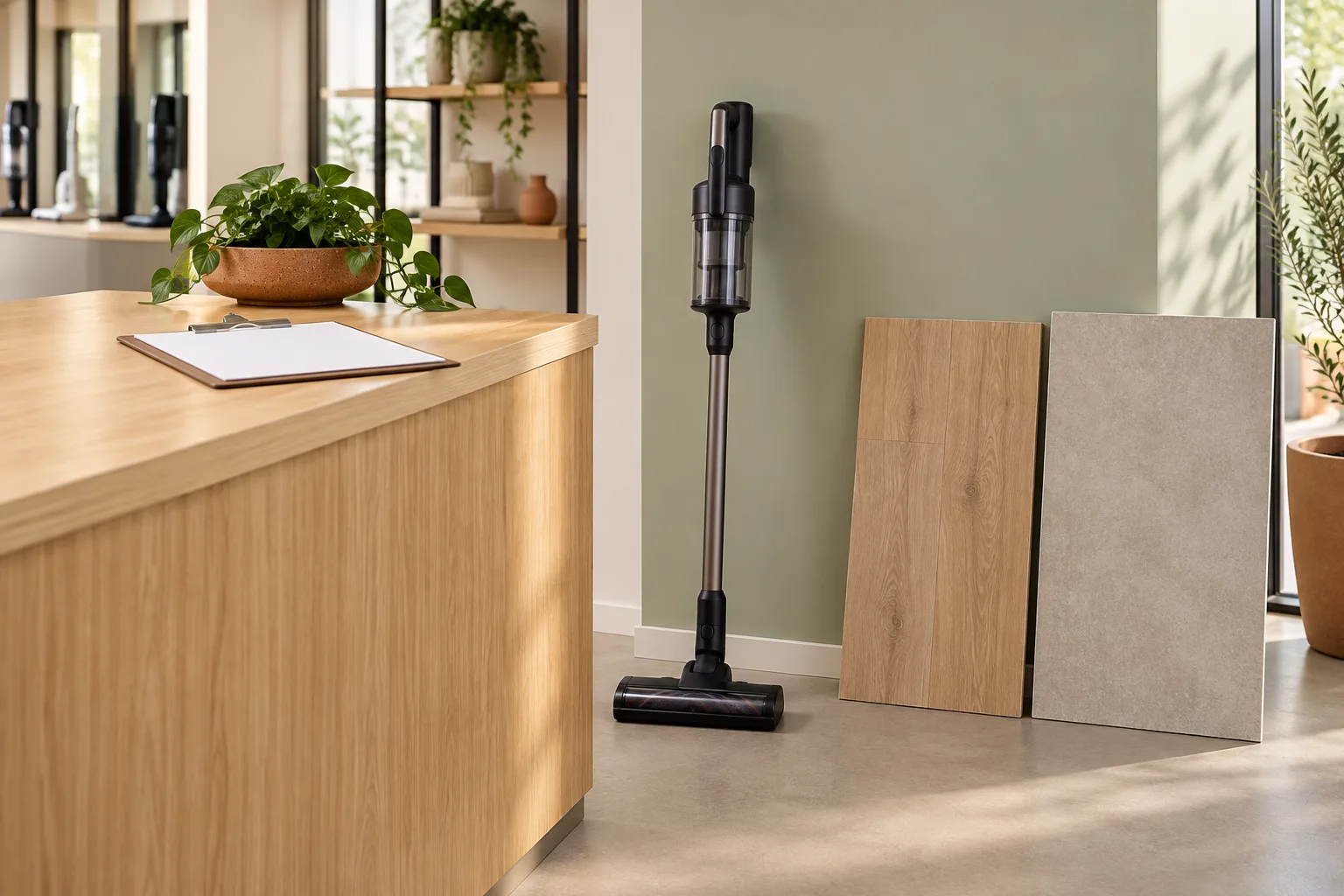
A demonstration is more useful when you know what you want to learn. Bring a short description of the rooms, surfaces and handling tasks that matter to your household. Include the exact floor identities where known and leave unknowns clearly marked. Choose a few consequential questions rather than trying to inspect every feature in the shop. This is an opportunity to understand the proposed configuration, not an invitation to perform improvised safety or durability tests. Follow the retailer's instructions for any permitted handling or demonstration.
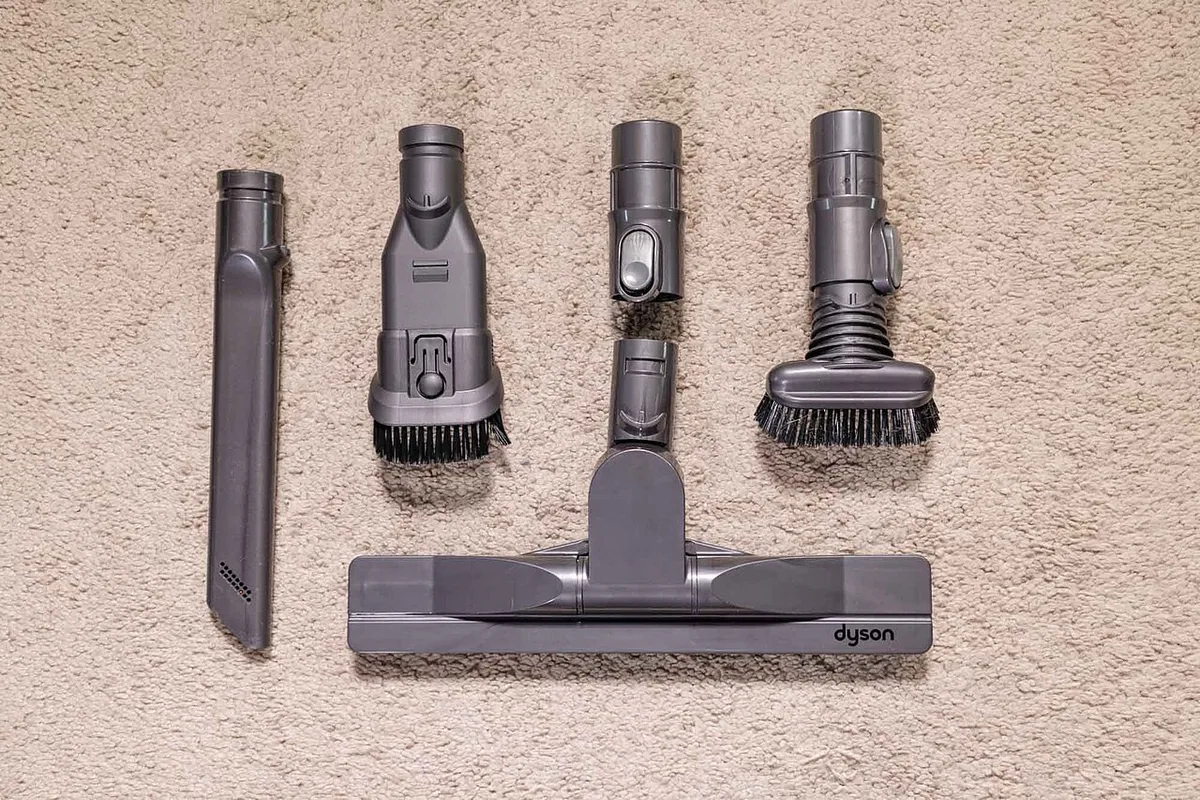
Identify the setup being shown
Record the machine model, fitted head or attachment and relevant operating configuration. Ask whether the demonstrated items are included in the quoted package. A convenient showroom example may use a different surface or arrangement from your home, so write down that difference. Do not treat a single successful movement as proof of whole-home suitability. For a robot cleaner, a demonstration on one transition does not answer every threshold question in your brief. For a manual vacuum, a brief trial records your experience under those conditions rather than a universal comfort result.
Use evidence to close a question
Ask for the official document or model-specific support reference behind an important answer. Dyson's Australian robot overview, checked on 2026-10-27, can help frame feature questions, but it does not replace the exact product instructions. Floor-care questions also need the relevant flooring evidence; Premium Floors' range distinctions illustrate why a broad surface label is not enough. A seller's explanation is most useful when its scope is clear. Save the written response where possible and note any assumptions about your home that the answer relies upon.
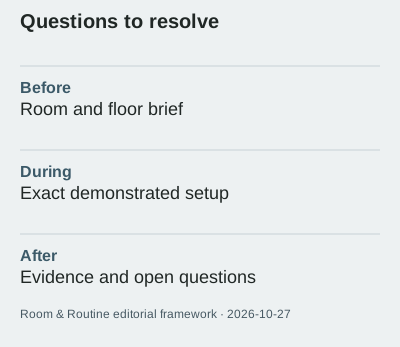
Track unanswered questions honestly
In an explicitly hypothetical demonstration sheet, seven clearly answered questions from ten leave three unresolved, or 30% of the list. This is not a product quality score. One unresolved essential requirement may matter more than several well-explained conveniences. Mark each answer as documented, observed under stated conditions or still open. That distinction prevents a friendly demonstration from turning into a page of unsupported ticks. If the retailer cannot answer a particular question, ask which manufacturer resource or support contact is best placed to address it.
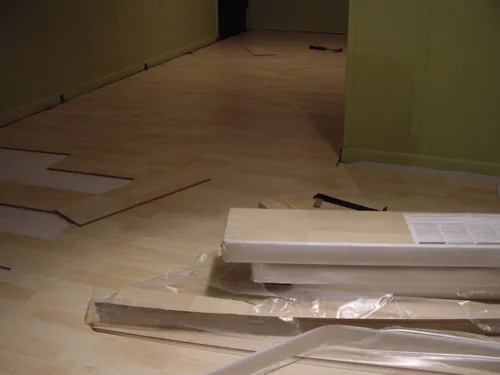
Keep the quote aligned with the demonstration
If the setup you prefer includes an extra, obtain a current quote that identifies it. A fictional AUD $70 attachment added to a fictional AUD $500 machine creates an AUD $570 scenario before other charges; those are illustrative amounts, not market prices. The additional item still needs compatibility and intended-use evidence. Do not let an appealing demonstration silently change the package being compared with another seller's offer. Keep the purchase scope and the task observations together so the difference is visible when you review the notes later.
Write the conclusion while it is fresh
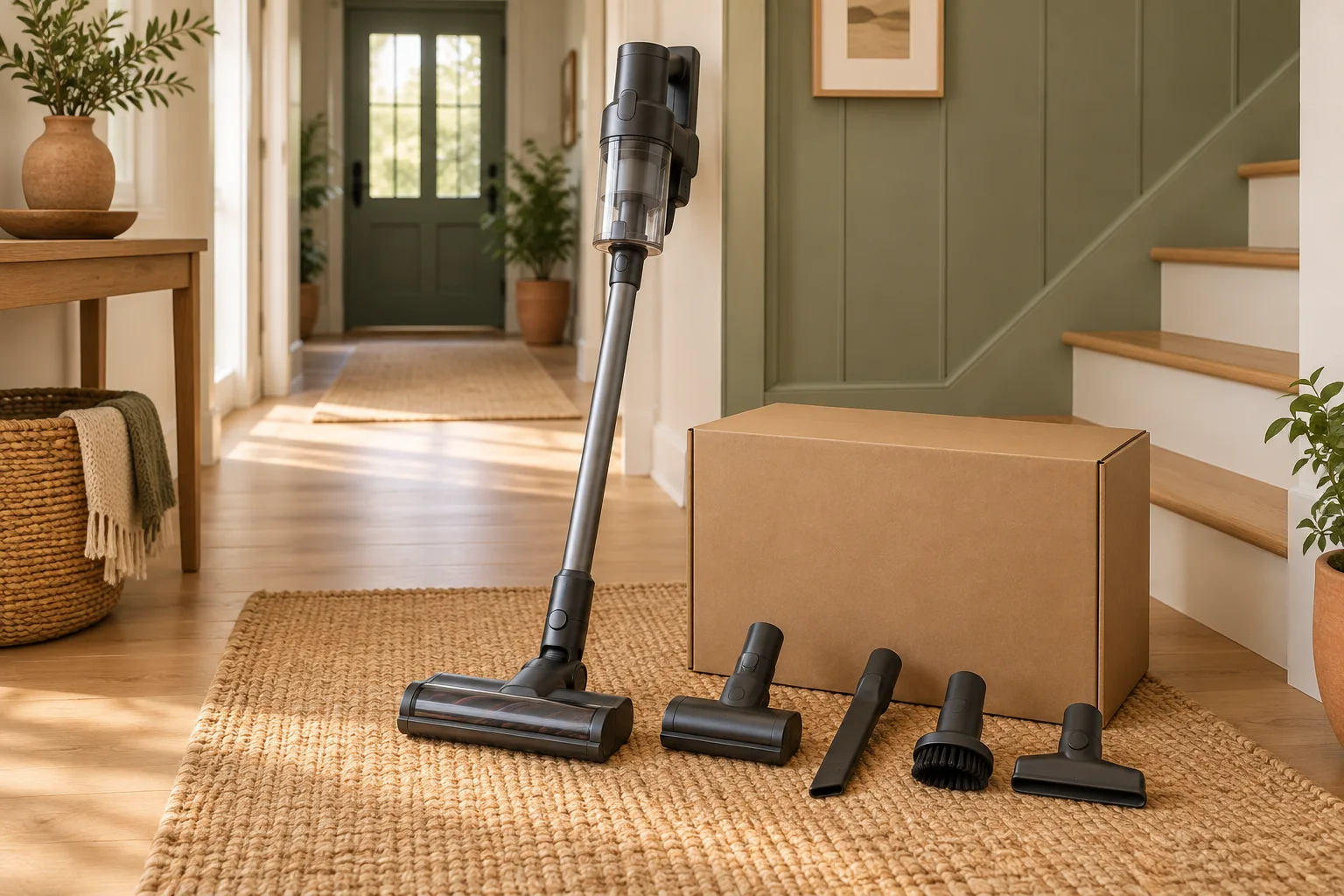
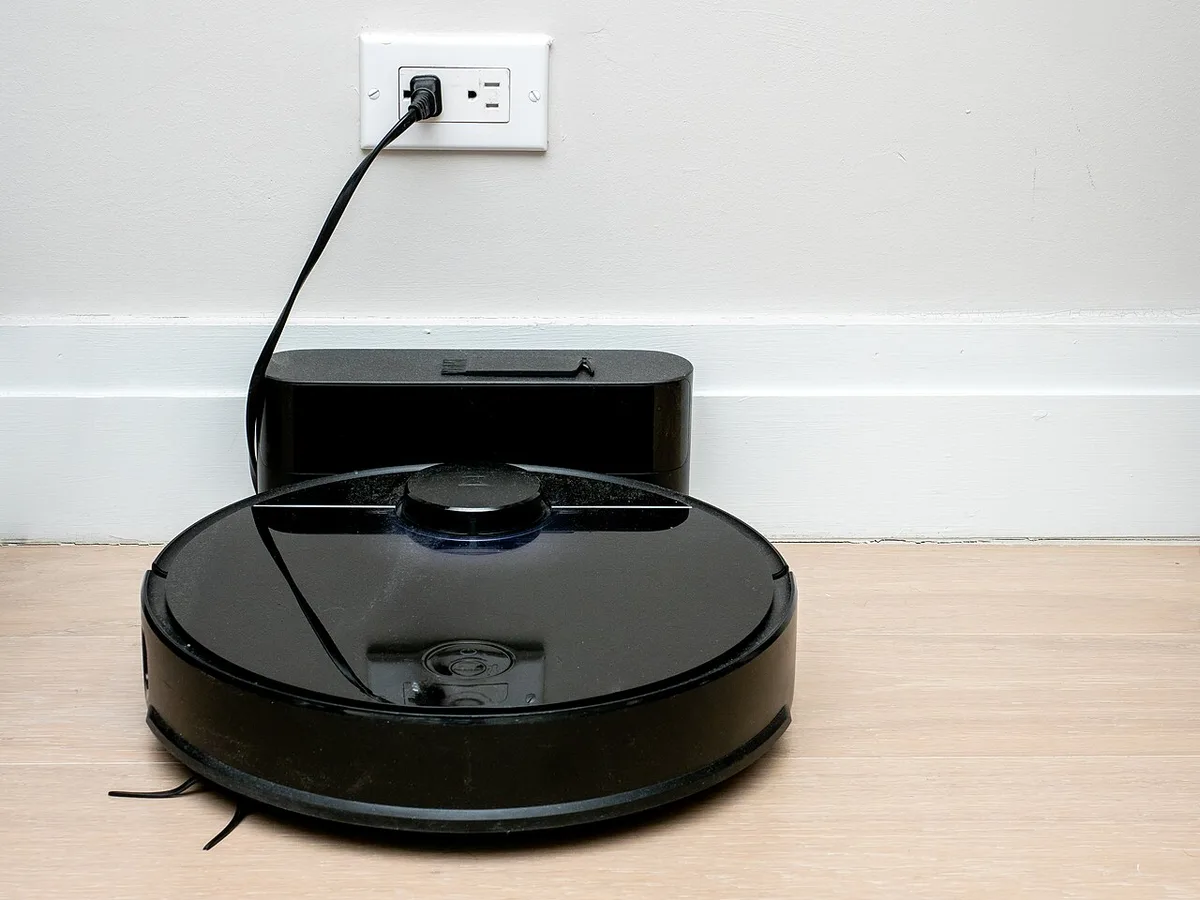
After the visit, record what you actually observed, what was explained and what remains unverified. Avoid adding a performance claim that the demonstration did not establish. Room & Routine has not conducted the trial represented by your personal notes, and the images in this article are context rather than test evidence. The generated lead photograph is a generic concept. A useful demonstration record does not need a winner immediately. It should make the next question clearer and give you a defensible reason to continue, revise or reject a shortlist.
Dyson AU — Robot vacuum selection questions ? Premium Floors Australia — Laminate maintenance ?